
Developing a Heat Battery for Industrial Use
Let us show you how we do it!
Our solution at a glance
Introducing Kelva Systems
We store renewable energy in the form of heat, using the simplest approach possible: by heating up a solid material (a.k.a. a thermal mass).
We take renewable electricity and convert it to heat using resistive heaters (same technology as a hair dryer) with ~100% conversion efficiency. This hot air passes through our proprietary concrete thermal storage blocks, heating them up to temperatures just below 600°C. The heat is stored in the thermal mass of the concrete and can be delivered to industry whenever needed (as steam or hot air), decoupling the intermittent supply of renewables from the energy demands of industrial production.
This is thermal storage done right.
We use concrete because it's effective, economical, and environmentally sound. Working with Empa (the Swiss Federal Laboratories for Materials Science and Technology), we are developing and validating a concrete formulation that can withstand high temperatures over 50 years of thermal cycling without performance or structural degradation. Concrete also gives us about 30% higher energy density than the most viable alternative, sand. And because it’s self-supporting, we can customize the shape to fit any site (tall and narrow, L-shaped, whatever your space constraints require).
Our systems can also capture and reuse waste heat from your facility: heat you’ve already paid for that’s currently being thrown away.
Kelva Systems
Concrete Thermal Energy Storage
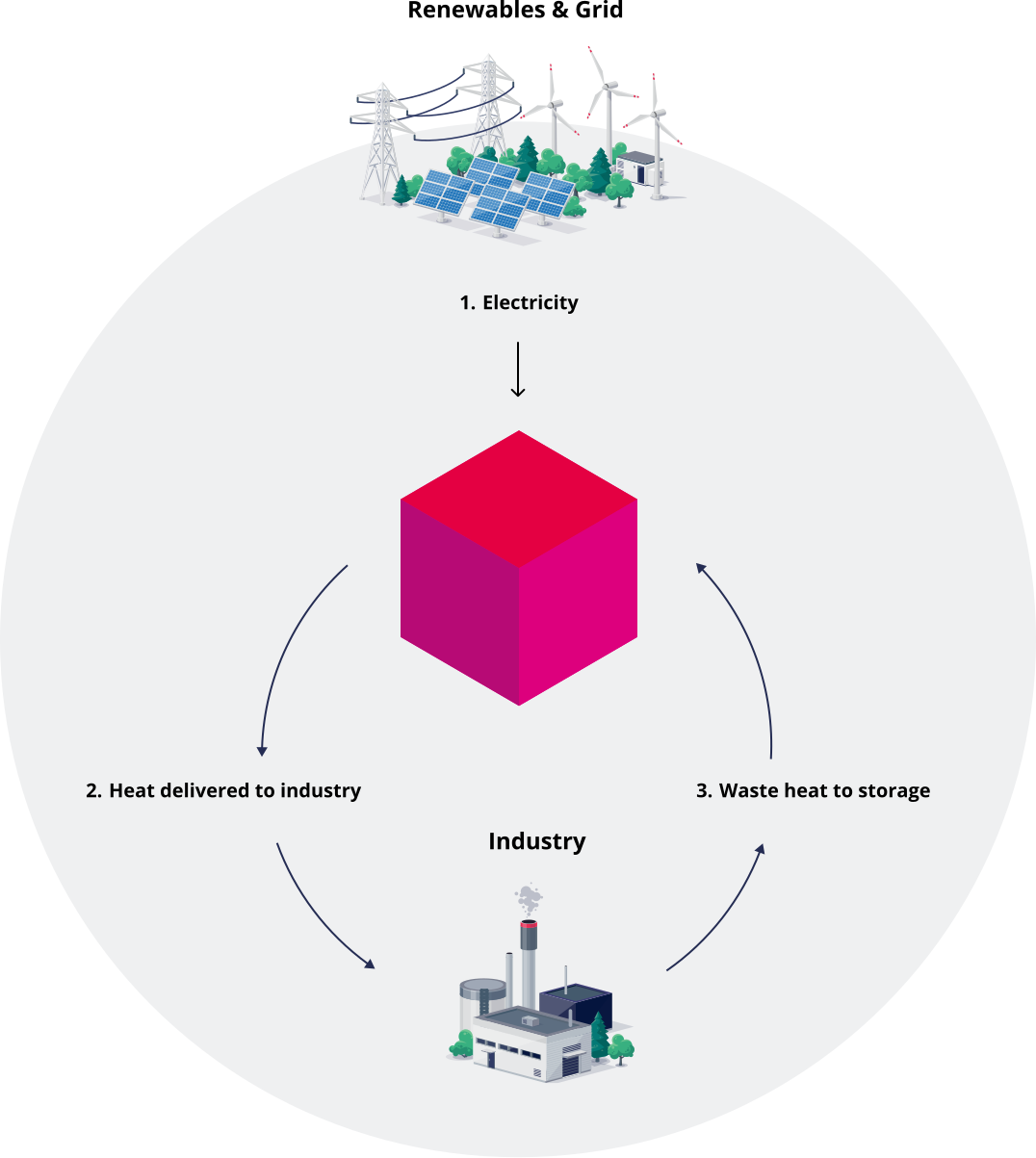
Kelva Systems Solution...

Halves energy prices
Captures waste heat
Eliminates carbon emissions
Reduces downtime risk
Target Markets
We serve two main markets: Industrial Heat and District Heating. Different industries need different temperatures as inputs into their production process. We provide heat in the form of steam or hot air, depending on the application. We target temperatures below 600°C and can therefore service around 60% of the total industrial heat needs.
Currently, industry spends around $600b to purchase this heat and vast majority of this heat is made by burning fossil fuels. As a result, industrial heat alone accounts for 18% of total carbon emissions. By switching industrial heat production from fossil fuels to renewable electricity, Kelva Systems facilitates decarbonization without deindustrialization.
All possible customers already rely on boilers and steam networks powered currently by fossil fuel. Our system is a drop-in solution that is powered by renewable electricity and does not require a redesign on the part of the customer.
Thermal energy storage (TES) for industrial heating
Heat is an essential input into the manufacturing process of many goods. This is what we call ‘industrial heat’. The vast amount of industrial heat is well below our operating temperature of 600°C. Typical boiler-based steam systems operate from roughly 150–540°C, meaning almost all conventional steam users fall inside our operating window.
Across chemicals, pulp & paper, food & beverage, the bulk of useful heat demand sits between ~70 and 250°C, with some chemical and steam systems running up to 400–500°C.
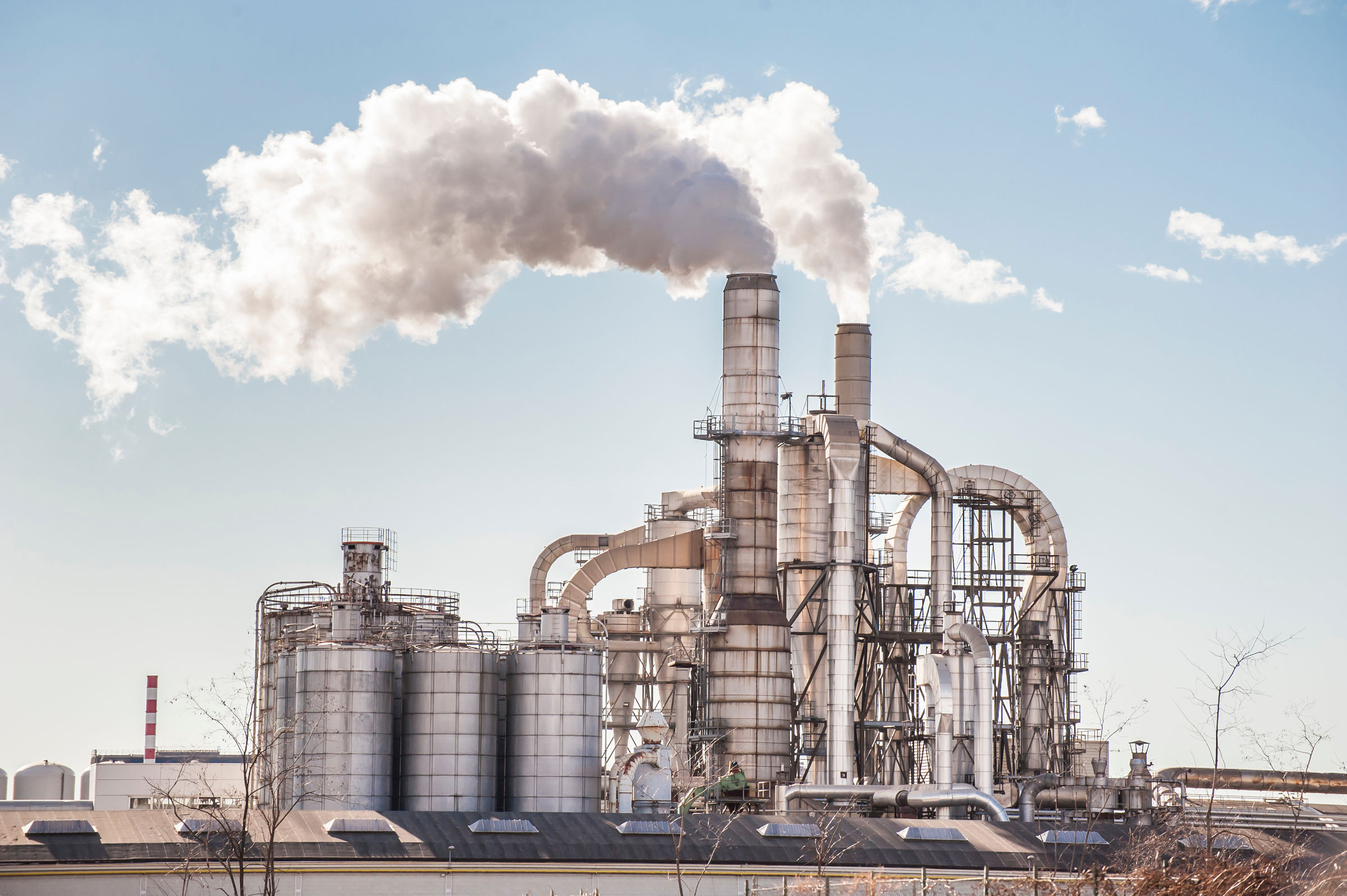


requires temperatures below 600°C
Here are some examples of heat used in our target industries
Pharmaceutical & Chemical Manufacturing
Pharma and various types of chemical manufacturing use a lot of heat in the low- to mid-temperature range: Distillation & Separation processes (100-500°C), Reactor heating & cooling (120-250°C), Sterilization & cleaning-in-place (CIP) (70–85°C)
Pulp & Paper
Pulp and paper mills are some of the most heat-intensive facilities in industry. Key uses: Paper drying cylinders (100-190°C), Pulping, bleaching, washing (under 200°C)
Food & Beverage
Food and beverage plants rely heavily on steam and hot water for: Pasteurization
63-90°C, UHT processes can go to about 130°C for a few seconds, Cooking & blanching 80–100°C, Cleaning-in-place (CIP) 70–85°C.
Why Kelva is the perfect fit for these sectors:
All of these use cases are far below 600 °C.
Our storage system can:
Charge with cheap, low-carbon electricity (e.g., at night or during high renewable output),
Store that energy at high temperature, and
Discharge as hot water or steam to cover peak loads and backup without fossil-fired peak boilers.
Almost all of this heat demand is highly repetitive day-to-day. That makes it perfect for pairing with renewable electricity + thermal storage, shaving fossil fuel use and emissions while keeping hygienic conditions and product quality. That means our thermal energy storage can tackle the core of industrial and district heat demand, not just niche side streams.
Proof of Concept
Co-founder designed a demonstration
facility at commercial scale
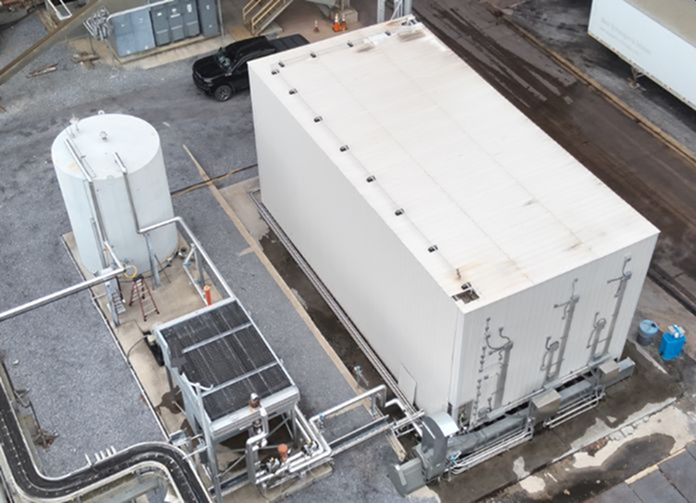
PoC operated at 530°C at Gaston Thermal Power Plant, USA
Successful 10 MWh proof of concept
Significant validation of performance, durability, and accuracy of thermodynamic modeling
Based on bench scale testing of concrete formulations sponsored by EPRI
Located at Gaston Thermal Power Plant, Alabama, USA
Supported by: EPRI | Southern Company | UNITED
ventures



About Us

B.A. Political Science, Wellesley College, USA
Maria Lisiakova, CEO
+41 (0)78 246 59 18

B.S. Physics, Appalachian State University, USA
Charles Little, CTO
+41 (0)78 246 59 18